An ICAI Unit is a large-scale research collaboration between knowledge institutes and partner organizations designed to bridge the gap between academic research and practical impact. While similar to ICAI Labs, a Unit operates on a much larger scale, typically consisting of 40 or more PhD students and postdocs.
Unlike the standard five-year lifespan of an ICAI Lab, an ICAI Unit is established for an indefinite period and is integrated into an organization’s core innovation pipeline. Beyond research, the Unit facilitates the entire implementation process which includes prototyping AI applications, conducting usability studies, managing legal and ethical checks, and organizing education to translate research outcomes into professional practice.
An ICAI Unit includes the same key elements as the ICAI labs, however it operates on a larger scale, with 40 PhD students/postdocs and up. This expanded structure allows the unit to move beyond standard research into full-scale application and implementation.
The focus of knowledge transfer is translating research outcomes into practice through the development and prototyping of AI-driven applications. This includes organizing education, conducting usability studies, and establishing procedures for legal and ethical checks or spin-off activities.
The overall high-level goal is to optimize for impact by creating applicable and adoptable AI solutions. Unlike Labs, Units aim to be permanent fixtures closely tied to an organization’s ongoing core innovation pipeline.
To establish an ICAI Unit, partners must fulfill a number of requirements. They should (1) commit to a partnership for an indefinite period of time , (2) provide a structure for implementation into professional practice and regulation , and (3) engage in full co-ownership of research questions and validation procedures.
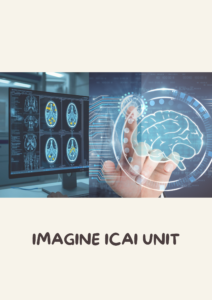
The ambition of IMAGINE (Open Innovation Lab for the development and implementation of Image-guided Interventions), a collaborative initiative between academic partners including UMC Utrecht, Radboud UMC, Utrecht University, Centrum voor Wiskunde & Informatica, TU Eindhoven, Fontys University of Applied Sciences, The Hague University of Applied Sciences, and Utrecht University of Applied Sciences, and industry partners such as Philips, Elekta, Tesla DC, Kalcio Healthcare, Lygature, Catharina Hospital, and the Dutch Cancer Institute (NKI), is to accelerate innovation in image-guided medical interventions.

By establishing an open innovation ecosystem that bridges the gap between technical AI development and clinical application, IMAGINE aims to ensure healthcare remains accessible and effective despite growing challenges such as staff shortages. The unit’s long-term, ten-year program is specifically designed to navigate the complex regulatory and evaluative stages required for real-world clinical impact in the medtech sector.
The IMAGINE research and implementation program is built upon several key pillars:
Clinical Integration & Workflow: Focusing on understanding the specific challenges and workflows within a clinical setting to develop AI solutions that are truly adoptable and effective.
Collaborative Innovation: Operating as a multi-institution initiative that invites private companies and academic partners to work directly within the clinic.
Technological Foundations: Leveraging core AI technical components including computer vision, machine learning, decision making, natural language processing, and explainable AI.
Societal Impact: Addressing United Nations Sustainable Development Goals, specifically focusing on “Improved Health and Wellbeing” and “Reduced Inequalities” in access to care.
Education & Training: Committing to the development of future experts by educating and training a large cohort of 55 PhD students and postdocs across technical and clinical disciplines.
The research program within IMAGINE is centered on practical transformation. By moving beyond isolated research projects, the unit focuses on:
Autonomous Systems: Developing autonomous MRI systems and automating screening processes, such as breast cancer detection, to alleviate the burden on medical staff.
End-to-End Implementation: Navigating the “valley of death” in medtech by managing the entire lifecycle of an AI solution, from initial prototyping and usability studies to legal, ethical, and regulatory validation.
Sustainable Infrastructure: Creating a permanent innovation pipeline where academic research, industrial product management, and clinical practice converge to solve complex challenges in oncologic diagnosis and image-guided therapy.