The Sociotechnical Turn in AI Governance: Bridging Theory and Practice
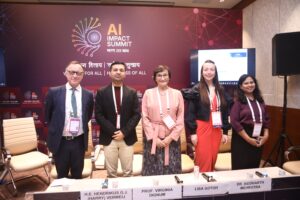
On February 17, 2026, the India AI Impact Summit 2026 was held in New Delhi, India. The “Sociotechnical Turn” in artificial intelligence research and governance is a paradigm shift reflecting a growing recognition that AI systems must be understood within their broader social contexts. However, this recognition comes with a critical paradox: despite increasing references to “sociotechnical AI,” interpretations have become fragmented, hampering coherent governance development. Through an interactive academic presentations format followed by a panel discussion, the event convened Indo-Dutch academic researchers and civil society representatives to translate sociotechnical theory into actionable governance practices. The session served as a flagship demonstration of the Netherlands’ commitment to inclusive, evidence-based AI governance, positioning the ICAI as a thought leader in bridging academic research with practical implementation.
Session highlights:
-
Defining the Sociotechnical Turn: The session moved beyond viewing AI as a purely technical challenge, emphasizing that social, organizational, and institutional contexts must be integrated into governance design from the very beginning.
-
Addressing the Critical Paradox: Experts addressed the gap where “sociotechnical AI” is frequently cited in theory but often lacks a coherent, unified approach in practical governance and policy development.
-
Operationalizing Trust: The panel explored how to build “calibrated trust” in AI systems, moving the conversation from abstract buzzwords toward actionable frameworks that can be used by public sector institutions.
-
Countering Algorithmic Bias: A major highlight was the discussion on how deep learning systems trained on historical data risk entrenching past inequities. The session stressed that deliberate design choices are required to ensure AI leads to better, more equitable futures.
-
Global Scaling of the ICAI Model: The Dutch ICAI model – a nationwide consortium of 59 labs and units – was presented as a successful, replicable blueprint for inclusive, evidence-based AI development that aligns with UN Sustainable Development Goals.
-
Indo-Dutch Strategic Synergy: The session highlighted the growing bilateral partnership between India and the Netherlands, featuring insights on the new Dutch International AI Strategy and the support of the Netherlands Innovation Network across New Delhi, Mumbai, and Bangalore.
-
Hybrid Global Engagement: Reflecting a commitment to accessibility, the session was held in person at Bharat Mandapam while being streamed live to a global audience on YouTube to foster a worldwide practitioner network.